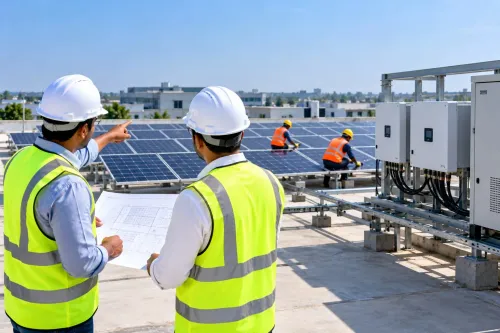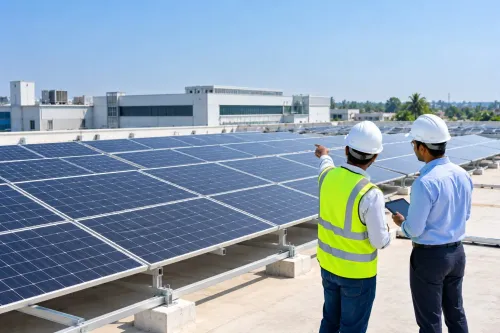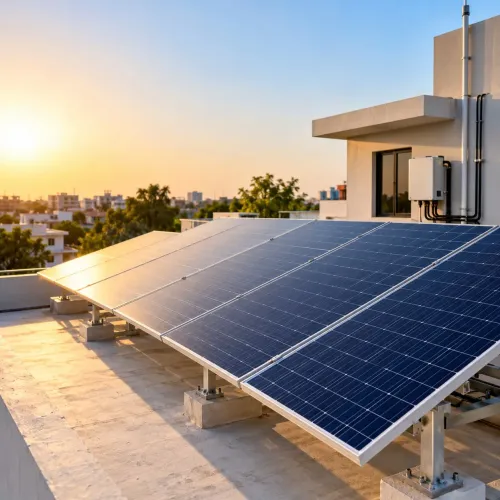

The PM Surya Ghar: Muft Bijli Yojana subsidy is tied to an eligible grid-connected residential electricity account, a qualifying installation, and verification through the National Portal for Rooftop Solar. By the end, you will know the subsidy ceiling, the Maharashtra application sequence, the documents to prepare, and which quotation details affect your actual payment.
Key takeaways
- Central subsidy covers the first 3 kW, with a maximum of ₹78,000.
- Secure DISCOM approval before installation and commissioning.
- Keep identity, bank account, electricity bill, and system documents ready.
- Compare quotations by equipment, warranty, scope, and maintenance—not price alone.
How much subsidy can your home installation receive?
For most states and union territories, the solar subsidy for home installation reaches a maximum of ₹78,000 for an individual household. The PM Surya Ghar: Muft Bijli Yojana calculates central financial assistance on the first 3 kW, not on every kilowatt in a larger system.
| Capacity | Central assistance | Maximum for that slab |
|---|---|---|
| Up to 2 kW | 60% of the benchmark cost, equal to ₹30,000 per kW | ₹60,000 |
| Additional 1 kW, taking capacity to 3 kW | 40% of the benchmark cost, equal to ₹18,000 per kW | ₹18,000 |
| Above 3 kW | No additional central assistance | Total remains ₹78,000 |
A 5 kW system can qualify for installation if your distribution company permits that capacity, but its subsidy is still capped at ₹78,000. Panel capacity also does not guarantee equivalent generation; roof orientation, shade, tilt, cable length and structural limits affect output.
To qualify, choose a grid-connected residential rooftop system linked to an eligible electricity consumer account and apply through the National Portal for Rooftop Solar. The installation must follow the scheme’s vendor and DISCOM requirements. A battery-only or stand-alone off-grid system does not qualify for this residential rooftop assistance.
Apartments and group housing societies have a separate route for systems serving common facilities, subject to scheme capacity and per-dwelling limits. A common-meter project is not automatically treated like separate systems installed on individual residential meters.
The Maharashtra application path: from DISCOM approval to commissioning
Your electricity connection determines the route: apply against the consumer number of the DISCOM serving the property, not against the roof address alone. For MSEDCL rooftop solar, use the National Portal for Rooftop Solar and select MSEDCL; properties served by another Maharashtra distribution company must follow that company’s portal and metering procedure.
1. Register on the national portal with the consumer number, mobile number and email linked to the electricity account. Submit the residential rooftop application and choose the correct DISCOM.
2. Wait for the DISCOM’s technical feasibility approval. It confirms whether the proposed system fits the connection, sanctioned load, local network and metering rules. Do not treat a vendor’s quotation as this approval.
3. Select a vendor registered on the portal, confirm the module and inverter configuration, and obtain a design for the actual roof. The vendor then installs the system after the approval and submits the installation details through the portal.
4. Request the DISCOM inspection. The inspecting officer checks the installed equipment, wiring, protection devices and documents before approving the meter change or bidirectional net meter. Resolve any defect before requesting commissioning.
5. Complete the agreement, meter installation and commissioning formalities with the DISCOM. The portal then records the commissioned system and sends the subsidy claim for verification.
6. After the required verification, the CFA is transferred to the eligible beneficiary’s bank account or loan account. A quotation showing an immediate discount is a separate commercial arrangement, not proof that the Maharashtra solar subsidy process is complete.
Documents, account details, and when the subsidy is released
A quotation is not usually reduced by the full subsidy amount at the time of purchase. The subsidy is tied to your grid-connected residential electricity account and is released only after the portal, vendor, and DISCOM records show that the eligible system was installed and verified.
Keep these rooftop solar subsidy documents and details ready for the National Portal for Rooftop Solar:
- Your latest electricity bill and consumer number, showing the property’s serving DISCOM
- The applicant’s name, mobile number, address, and identity details, matching the electricity connection
- Bank account number, account-holder name, and IFSC code for bank account validation
- A cancelled cheque or passbook page if the portal requests proof of the account
- Vendor and system details entered during the application, including the registered vendor’s information
The portal or DISCOM may ask for additional files during processing. Upload clear scans, and check that the applicant, consumer account, and bank account names do not conflict; a mismatch can delay approval or payment.
After installation, the DISCOM completes inspection and metering formalities, while the required commissioning information is recorded against the application. Only after these checks does subsidy release proceed to the beneficiary’s validated bank account or eligible loan account.
Treat any immediate discount promised by a seller as a separate commercial offer, not proof that the government CFA has already been paid.
Read the quotation correctly before comparing vendors
A ₹78,000 subsidy does not mean every 3 kW quotation costs ₹78,000 less. The CFA uses the notified solar benchmark cost: 60% for the first 2 kW and 40% for the third kW, creating a 3 kW subsidy cap of ₹78,000. Any vendor price above that benchmark remains your responsibility.
1. Ask each vendor to separate the system price, expected CFA, and your payable amount. A 5 kW plant can be installed if the DISCOM permits it, but the central subsidy does not rise above 3 kW. Do not compare a subsidised 3 kW figure with an unsubsidised 5 kW total.
2. Check what the rooftop solar quotation includes. Demand separate lines for panels, inverter, mounting structure, earthing, protection devices, installation, commissioning, and application charges. Confirm whether batteries, civil repairs, waterproofing, scaffolding, additional wiring, cable trenching, meter fees, and approval charges are excluded.
3. Match the design to your roof, not only the nameplate. Ask for the panel layout, direction, tilt, shade assessment, cable length, and structural observations. Shade, weak roofing, long cable runs, or a smaller usable roof can reduce generation without changing the quoted kW.
4. Confirm the net metering Maharashtra process with your DISCOM before paying. Ask whether your sanctioned load, inverter capacity, meter arrangement, and export-settlement rules permit the proposed system. Exported electricity is not automatically worth the same as power you consume directly.
SunsetLife Solar Pvt. Ltd should be asked to show these assumptions in writing, just as you should with every competing installer.
Related products
 | Residential Solar Rooftop System Residential Solar Rooftop System Residential Solar Rooftop Systems are designed to convert sunlight into clean, reliable electricity for homes, helping homeowners reduce energy costs... View product → |
 | On-Grid Solar Power System On-Grid Solar Power Systems are connected to the electricity grid, allowing users to export excess power and benefit from net metering. View product → |
Check equipment compliance, maintenance duties, and apartment rules
Before signing the installation completion form, match the equipment, electricity account, and ownership arrangement with the National Portal for Rooftop Solar records. The wrong module or an unapproved configuration can make a technically working system ineligible for subsidy.
Use this final checklist:
- Confirm the vendor is a registered solar vendor under the scheme, and keep the vendor selection, application number, invoice, commissioning report, and DISCOM inspection record.
- Ask for written confirmation that the modules and equipment meet MNRE domestic-content requirements and are accepted on the portal. Record the module make, model, capacity, serial numbers, and inverter details.
- Check that the subsidy-linked consumer number, meter, property address, applicant name, and bank or loan account match your DISCOM and portal records.
- Obtain the vendor’s written warranty, inverter warranty, exclusions, response times, and rooftop solar maintenance commitment. Confirm who handles faults after commissioning and for the prescribed maintenance period.
- For an individual home, get written permission for roof access if you do not own the terrace, and record responsibility for waterproofing, structural damage, cleaning, and future repairs.
- For an apartment, obtain the society’s written approval before installation. For a group housing society solar subsidy, pass the required resolution, identify the common meter and beneficiaries, and document roof-use rights, maintenance costs, access, and electricity-credit allocation.
- Do not assume a common-meter system receives the same treatment as separate systems on individual meters; verify the arrangement with the DISCOM and portal before purchase.
Frequently asked questions
How much subsidy can a home rooftop solar installation receive?
Under PM Surya Ghar: Muft Bijli Yojana, central assistance is calculated on the first 3 kW. The maximum subsidy for an individual household is ₹78,000.
What is the Maharashtra application path for rooftop solar subsidy?
Apply through the prescribed PM Surya Ghar process, obtain approval from your electricity distribution company, install the approved system, and complete inspection and commissioning before subsidy release.
Which documents and account details are needed for the subsidy?
Keep your recent electricity bill, consumer account details, identity and address proof, bank account information, and installation and commissioning records ready. Use an account that matches the applicant details where the application requires it.
What should you check in a rooftop solar quotation?
Check the system capacity, panel and inverter models, mounting structure, protection equipment, approvals, installation scope, warranties, commissioning work, maintenance duties, taxes, and exclusions before comparing prices.
Related products
 | Hybrid Solar Power System Hybrid Solar Power Systems combine the benefits of on-grid and off-grid solutions. View product → |
 | Off-Grid Solar Power System Off-Grid Solar Power Systems operate independently from the utility grid and include battery storage. View product → |
 | Industrial Solar System Our Industrial Solar Power Plants are designed for factories, warehouses, and large-scale manufacturing units. View product → |