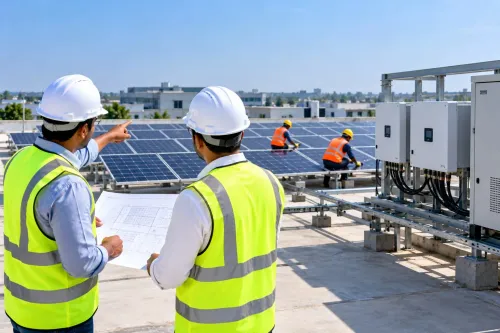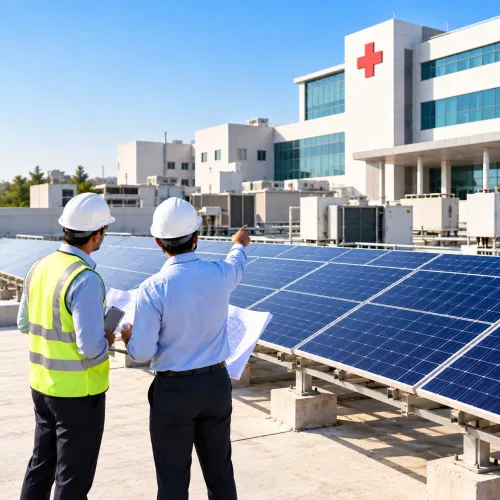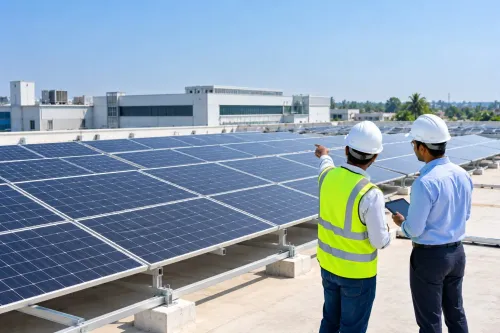

Large-scale solar installations involve much more than placing panels on rooftops. Commercial, industrial, and institutional solar projects require coordinated engineering, procurement, electrical integration, and construction planning. This is where solar EPC companies become important.
The term EPC stands for Engineering, Procurement, and Construction. In the solar industry, EPC providers manage complete project execution from planning to commissioning.
As solar adoption grows across Maharashtra, many businesses in Nashik are choosing EPC-based execution models to simplify complex energy projects.
What Does a Solar EPC Company Actually Do?
A solar EPC company handles the complete lifecycle of a solar project.
This usually includes:
- Site evaluation
- Load analysis
- Engineering design
- Procurement of components
- Structural planning
- Electrical integration
- Installation
- Testing and commissioning
- Utility coordination
Instead of hiring separate contractors for different stages, customers work with a single execution partner.
Why EPC Services Matter for Commercial and Industrial Projects
Large projects involve multiple technical and operational challenges.
Engineering Accuracy
System efficiency depends heavily on proper engineering calculations and design planning.
Procurement Coordination
EPC providers manage sourcing of panels, inverters, structures, and safety equipment according to project specifications.
Construction Management
Commercial and industrial installations require structured execution to avoid operational disruption.
Compliance and Safety
Electrical safety standards and utility requirements must be followed carefully.
Advantages of Working With an EPC Provider
Better Project Coordination
A centralized execution model reduces communication gaps between vendors.
Improved Accountability
One company remains responsible for project quality and timelines.
Faster Execution
Integrated teams often complete projects more efficiently.
Technical Consistency
Engineering, procurement, and installation remain aligned under one project strategy.
Types of Projects Typically Managed Through EPC Models
Solar EPC services are commonly used for:
- Industrial plants
- Warehouses
- Hospitals
- Educational institutions
- Commercial office buildings
- Large residential developments
Projects with higher system capacities generally benefit the most from EPC execution.
Factors Businesses Should Evaluate Before Selecting an EPC Provider
Technical Experience
Experience with commercial and industrial installations is important.
Component Quality
The lifespan and efficiency of the system depend heavily on equipment standards.
Project Portfolio
Past projects provide insight into execution capability.
Maintenance Support
Long-term service and monitoring support should be discussed clearly.
Common Questions Businesses Ask
Are EPC Projects More Expensive?
While EPC services may involve structured project management costs, they often reduce long-term technical and operational risks.
Can EPC Companies Handle Utility Approvals?
Most experienced providers assist with approvals, documentation, and net metering coordination.
Is EPC Suitable for Smaller Businesses?
Yes, many medium-scale commercial properties also use EPC models for organized execution.
Solar Infrastructure Requires Professional Planning
As businesses increasingly rely on renewable energy for operational efficiency, professional project execution becomes more important. Solar systems are long-term infrastructure investments that require proper engineering and technical coordination from the beginning.
Companies like SunsetLife Solar Pvt. Ltd support commercial and industrial clients in Maharashtra through EPC-based solar solutions designed to simplify project execution while improving long-term energy performance.
Keywords